Also known as
- Wimmera Catchment Management Authority

Integrated catchment management (ICM) recognises that land, water and biodiversity are all part of connected systems that span from the top of the catchment to aquatic environments. It relies on people working together to coordinate planning, investment and on-ground activities in an efficient and effective way to achieve a range of environmental, social, economic and cultural outcomes.
Catchment Management Authorities are required to develop a Regional Catchment Strategy(RCS) that outlines long-term environmental strategies for ICM in the Wimmera. The RCS is formed hand-in-hand with regional communities, ensuring policies hit the ground effectively though integration, partnerships and practical action.
Wimmera RCS isonline at https://wimmera.rcs.vic.gov.au/
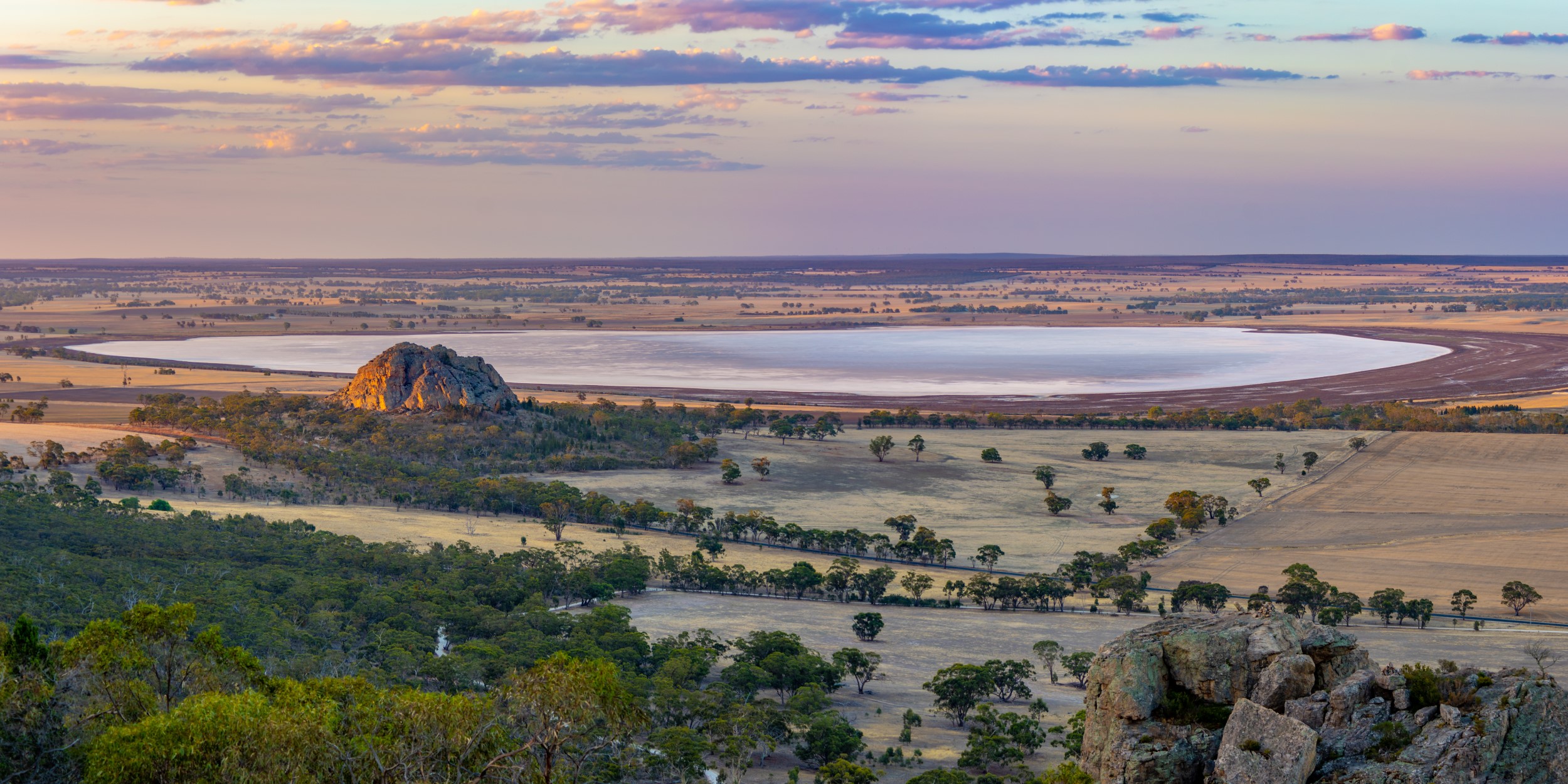
Our region, the Wimmera, covers approximately 10% of Victoria and is the fifth largest catchment management region in Victoria, encompassing 2.3 million hectares. The landscape is dominated by broadacre cropping. It also contains 25% of Victoria’s wetlands, including Gurru (Lake Hindmarsh) and Ramsar listed Ngalpakatia/Ngelpagutya (Lake Albacutya) and has the largest Victorian river that does not flow to the sea, The Barringgi Gadyin (WimmeraRiver). The Wimmera also includes the Pyrenees Range, Gariwerd (Grampians National Park), Burrunj (Black Range State Park), Dyurrite (Mt Arapiles) and Little Desert National Park.
Catchment management is balancing the use and conservation of natural resources on awhole of catchment basis.
Our prime responsibilities are the health of land and water in the Wimmera and promoting sustainable and productive land use practices, licensing works on waterways, and planning referrals on flood plains. We achieve these by working in partnership with the community, stakeholders, government andpartners to deliver local programs that identify and address improvements in the region’s natural assets.


